

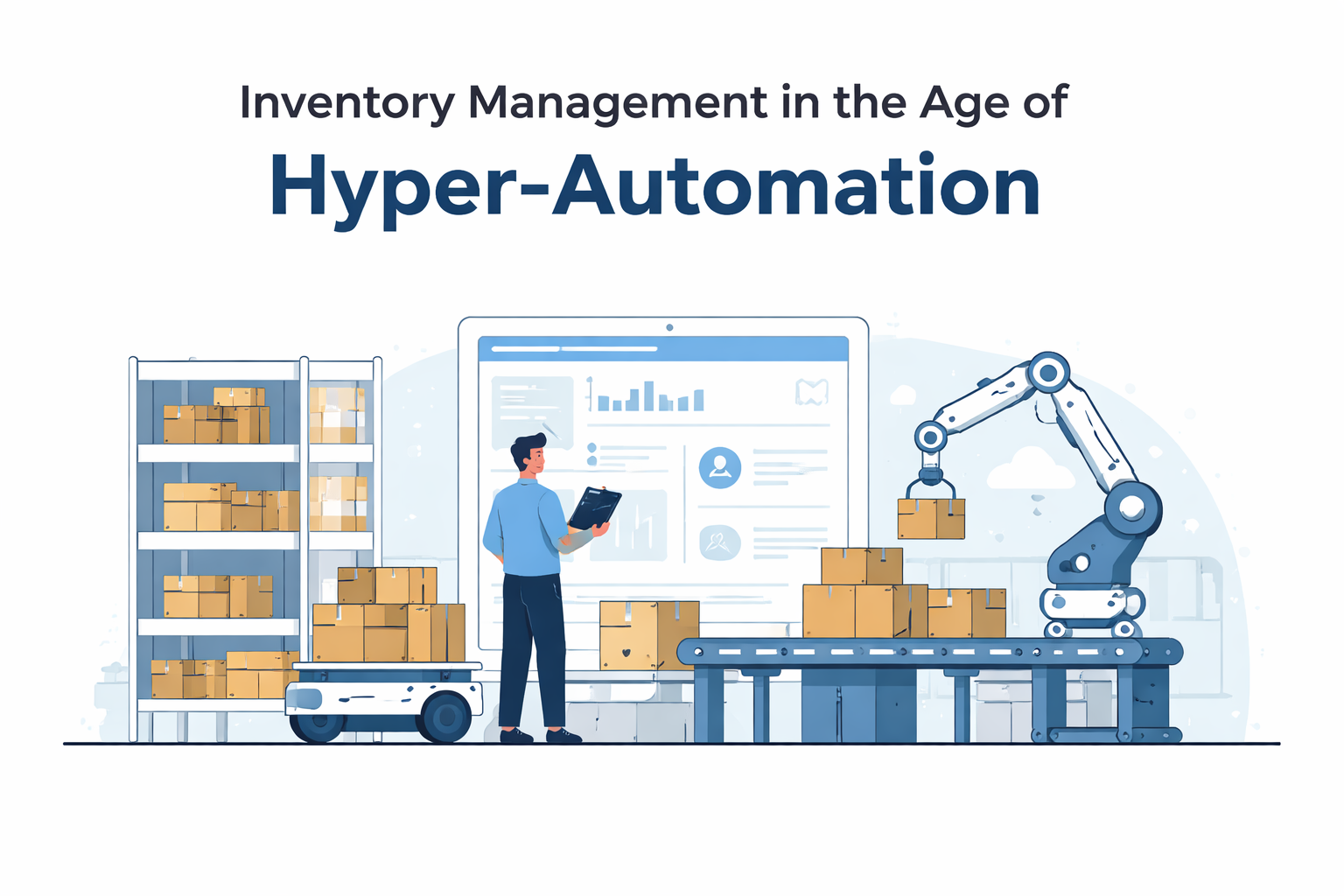
Technology is changing how businesses manage their inventory. What once required manual counting, spreadsheets, and paperwork can now be handled automatically with smart systems.
We are now living in the age of hyper-automation where multiple technologies work together to automate processes from start to finish.
But what does that mean for inventory management?
Let’s break it down in simple terms.
What Is Hyper-Automation?
Hyper-automation is the use of advanced technologies like:
- Cloud software
- QR codes and barcodes
- Artificial intelligence (AI)
- Automated alerts
- Real-time data syncing
- Workflow automation
Instead of automating just one small task, hyper-automation connects everything into one smart system.
In inventory management, this means fewer manual steps and more automatic updates.
How Inventory Management Used to Work
In the past, businesses relied on:
- Excel sheets
- Paper logs
- Manual stock counting
- Separate systems for each location
- Delayed reporting
This created problems like:
- Human errors
- Stock mismatches
- Lost assets
- Overstocking or stockouts
- Slow decision-making
Manual processes simply cannot keep up with modern business speed.
How Hyper-Automation Changes Inventory Management
1. Real-Time Tracking
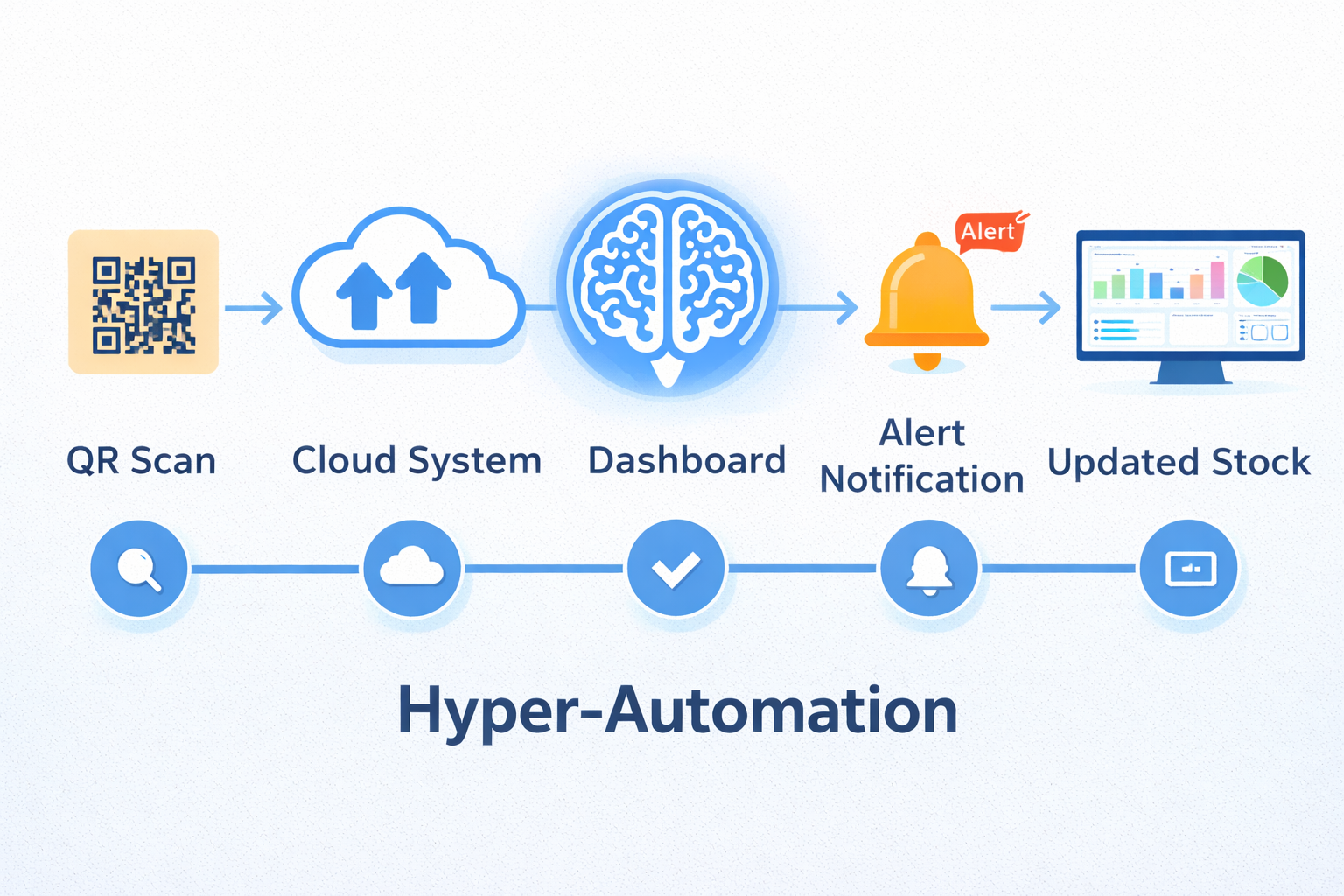
When an item is scanned using a QR code or barcode, the system updates instantly.
There is no need to:
- Manually update spreadsheets
- Send emails to notify teams
- Recount stock every time
Everything happens automatically.
2. Automatic Alerts
Modern systems can send alerts when:
- Stock is running low
- An asset is moved
- Maintenance is due
- A product reaches reorder level
This helps businesses act early instead of reacting late.
3. Reduced Human Errors
Manual data entry often leads to mistakes.
Automation reduces:
- Duplicate entries
- Wrong quantities
- Missing records
- Data confusion
Scanning and automated workflows improve accuracy significantly.
4. Faster Audits
Inventory audits used to take days.
Now, with automated tracking:
- Assets are digitally logged
- Reports are generated instantly
- History is stored automatically
This saves time and improves compliance.
5. Multi-Location Visibility
With cloud-based inventory systems, you can see stock across all locations in one dashboard.
Managers no longer need to call different branches for updates. The system shows live data instantly.
The Role of Cloud-Based Systems
Hyper-automation depends heavily on cloud technology.
Cloud inventory systems allow:
- Secure data storage
- Access from anywhere
- Real-time updates
- Multiple user access
- Role-based permissions
Everything stays connected and updated without manual syncing.
Why Businesses Are Moving Toward Automation
Companies today need:
- Speed
- Accuracy
- Transparency
- Scalability
Hyper-automation helps businesses:
- Reduce operational costs
- Improve stock accuracy
- Prevent asset loss
- Make faster decisions
- Grow without increasing workload
In competitive markets, manual systems are no longer enough.
Is Hyper-Automation Only for Large Companies?
Not at all.
Small and medium-sized businesses benefit even more because:
- They save time
- They reduce hiring costs
- They avoid expensive mistakes
- They improve productivity
Modern web-based inventory systems make automation affordable and easy to implement.
The Future of Inventory Management
We can expect:
- AI predicting stock shortages
- Smart reorder systems
- Automated supplier communication
- Integrated maintenance tracking
- Fully connected supply chains
Inventory management is becoming smarter every year.
Businesses that adopt automation early will stay ahead.
Conclusion
Inventory management in the age of hyper-automation is not about replacing people. It is about reducing repetitive work and improving accuracy.
By combining cloud technology, QR scanning, real-time dashboards, and automated alerts, businesses can manage inventory faster and more efficiently than ever before.
The future of inventory is connected, automated, and intelligent.
And businesses that embrace it will grow with confidence.