

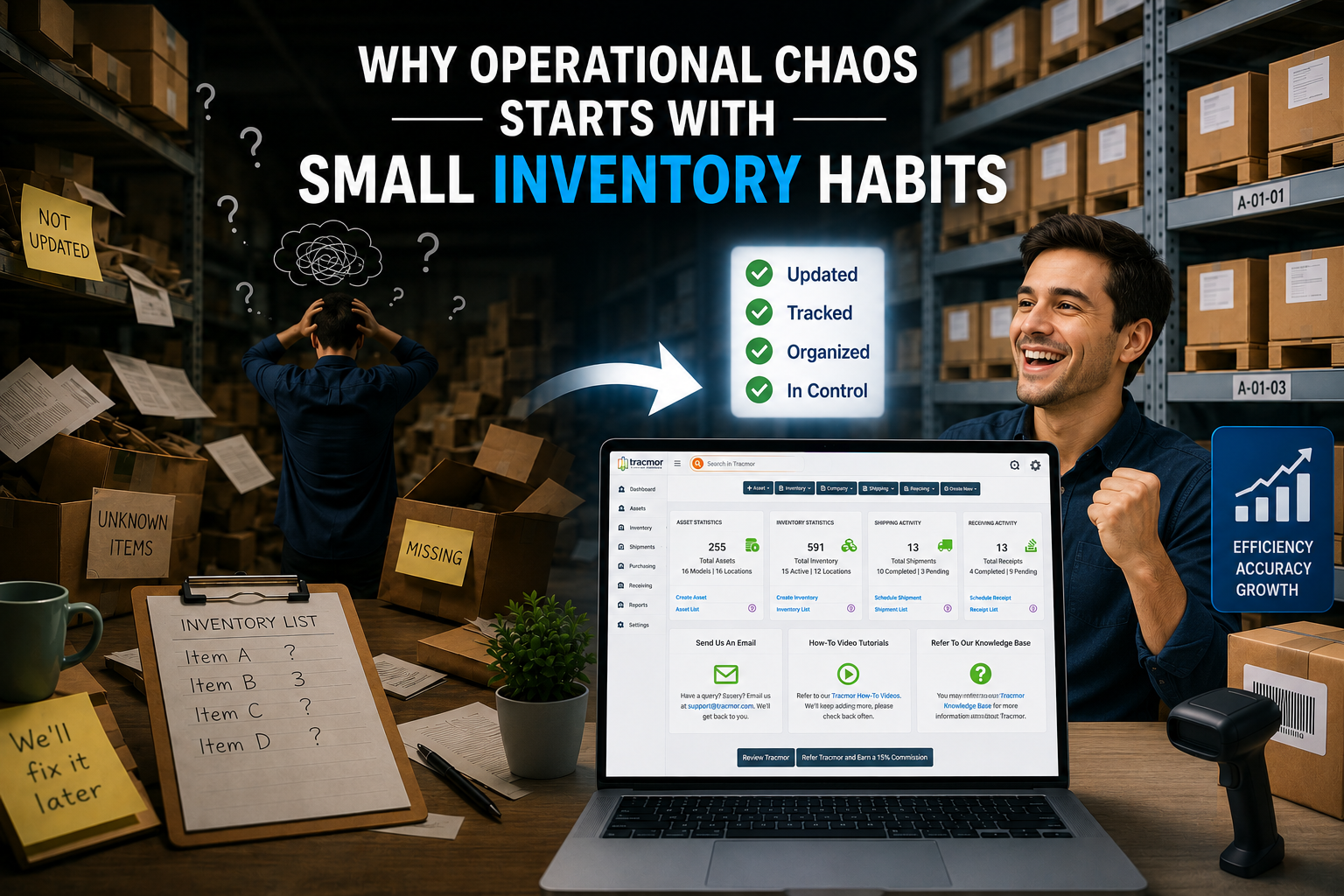
Running a business smoothly is not only about big strategies and major decisions.
Sometimes, operational chaos begins with very small daily habits that people often ignore.
- A missing stock update
- An item placed in the wrong location
- A team member saying, “We’ll fix it later”
- A barcode that was never scanned
These small actions may not seem serious at first. But over time, they slowly create confusion across the entire operation.
Most inventory problems do not appear overnight. They build quietly through small inconsistencies that continue every day.
As businesses grow, these small habits become harder to manage and eventually start affecting productivity, reporting, communication, and decision-making.
Small Inventory Habits That Create Big Problems
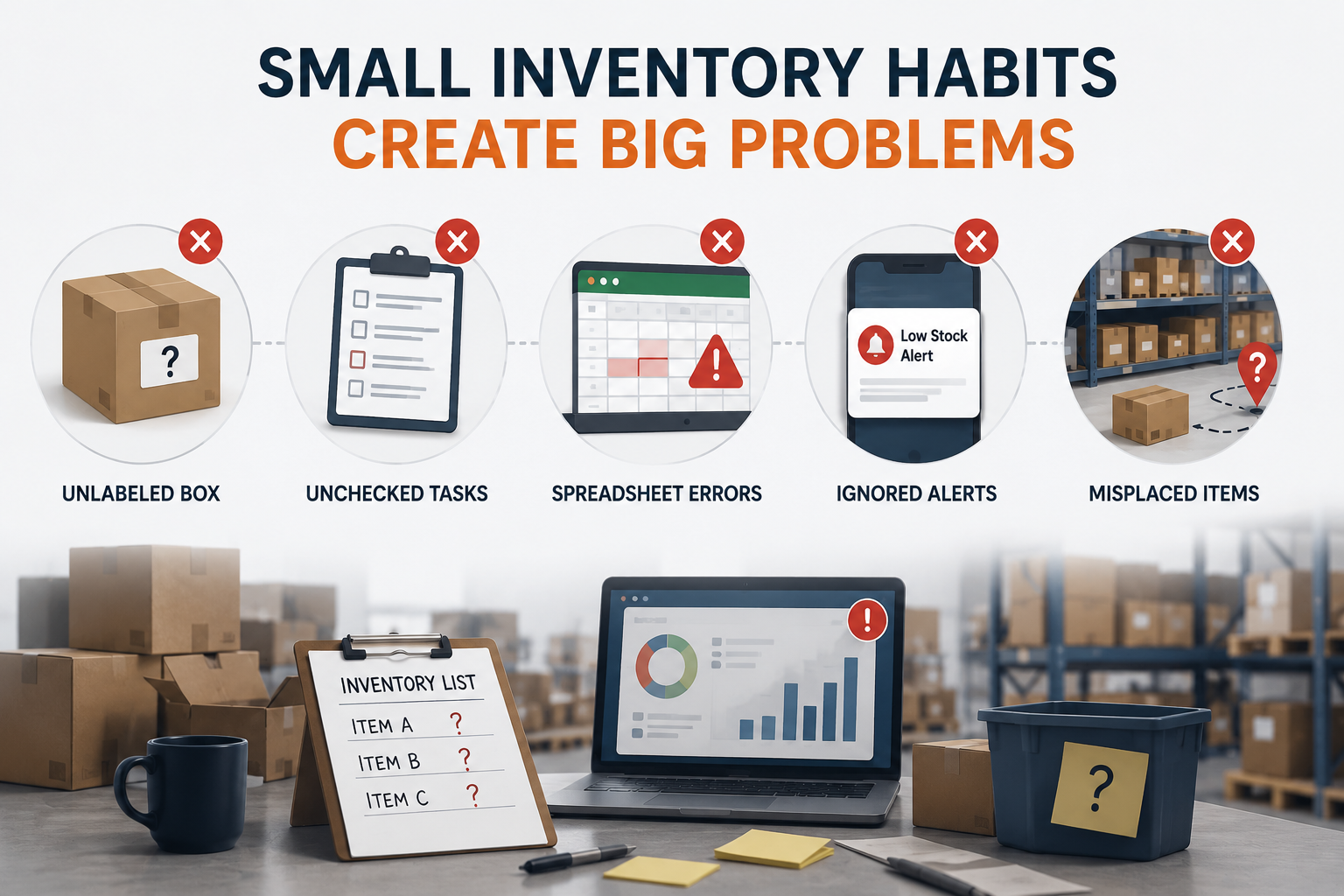
In many businesses, inventory issues begin with simple habits repeated regularly.
1. Not Updating Stock Immediately
When inventory is not updated in real time, stock records quickly become inaccurate.
Teams may believe products are available when they have already been:
- sold
- moved
- used
- reserved elsewhere
This creates confusion and wastes valuable time.
Employees often stop work just to confirm inventory manually.
2. Borrowing Equipment Without Logging It
Sometimes employees temporarily move or borrow equipment without recording it properly.
Later:
- nobody knows where the item went
- teams cannot find tools
- managers assume items are missing
Even small missing assets can interrupt daily operations and delay important tasks.
3. Using Different Spreadsheet Methods
Many businesses still rely on spreadsheets managed by multiple departments.
The problem is that every team often tracks inventory differently.
One department may:
- use different naming formats
- organize files differently
- update records inconsistently
Over time, inventory data becomes unreliable and difficult to manage.
4. Ignoring Low-Stock Warnings
Low-stock issues rarely become emergencies immediately.
That is why many teams ignore them until it is too late.
This often leads to:
- stock shortages
- rushed purchases
- delayed operations
- higher purchasing costs
Small delays in restocking can create much larger operational problems later.
5. Delaying Inventory Audits
Inventory audits help businesses identify mistakes early.
But many companies postpone audits because they:
- take time
- interrupt workflows
- require manual effort
The longer audits are delayed, the more hidden errors continue growing unnoticed.
Eventually, inventory records stop matching actual stock.
6. Poor Labeling Habits
Unclear labels, damaged barcodes, or missing item information make inventory difficult to track.
Employees spend unnecessary time:
- searching for products
- verifying items manually
- correcting inventory mistakes
Poor labeling slows down operations and increases frustration across teams.
How Small Habits Create Operational Chaos
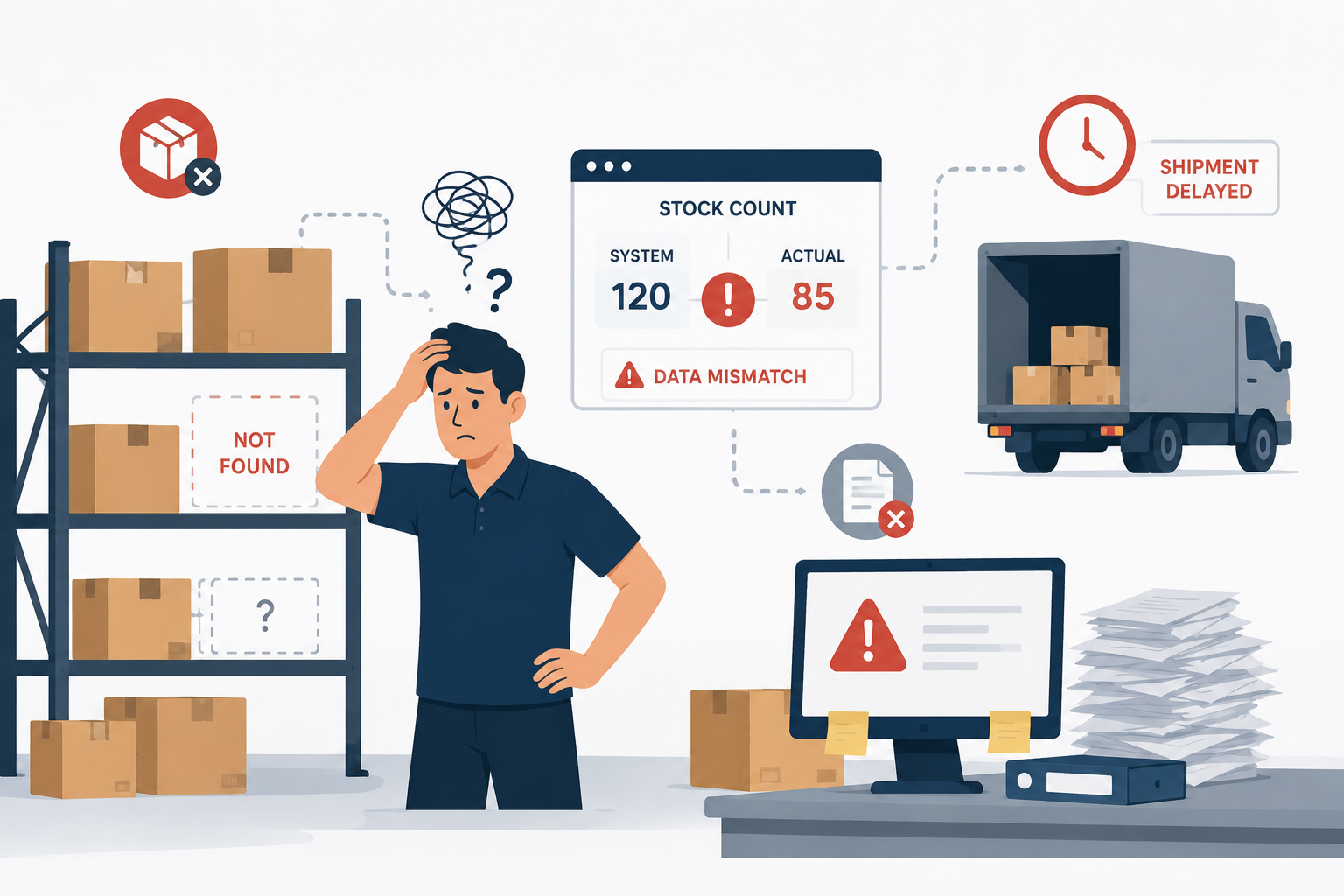
At first, these problems may seem small and manageable.
But over time, they begin affecting the entire business operation.
1. Lost Time and Reduced Productivity
Employees waste hours:
- searching for inventory
- correcting mistakes
- verifying stock manually
- communicating missing information between teams
Small inefficiencies slowly reduce overall productivity.
2. Confused Teams and Poor Communication
When inventory data becomes inaccurate, different teams begin working with different information.
This creates:
- confusion
- duplicate work
- communication delays
- operational frustration
Reliable inventory systems are essential for team coordination.
3. Duplicate Purchases
Businesses sometimes reorder products or equipment they already own simply because nobody can locate them properly.
This increases unnecessary spending and creates inventory waste.
4. Delayed Projects and Operations
Missing tools, unavailable stock, or inaccurate records can delay:
- projects
- shipments
- maintenance work
- customer orders
What began as a small tracking issue can quickly affect larger business operations.
5. Inventory Mismatches
Over time, physical inventory and system records stop matching correctly.
These mismatches create:
- inaccurate reports
- audit problems
- poor forecasting
- unreliable business data
6. Poor Decision-Making
Business decisions depend heavily on accurate inventory information.
If inventory data is unreliable, businesses struggle to:
- plan purchases
- forecast demand
- allocate resources
- manage operational costs
Good decisions require accurate visibility.
How Small Inventory Habits Affect Real Businesses
Imagine a warehouse employee moving equipment to another location without updating the system.
Later:
- another employee cannot find the item
- the business assumes it is missing
- a replacement is ordered unnecessarily
- project work gets delayed
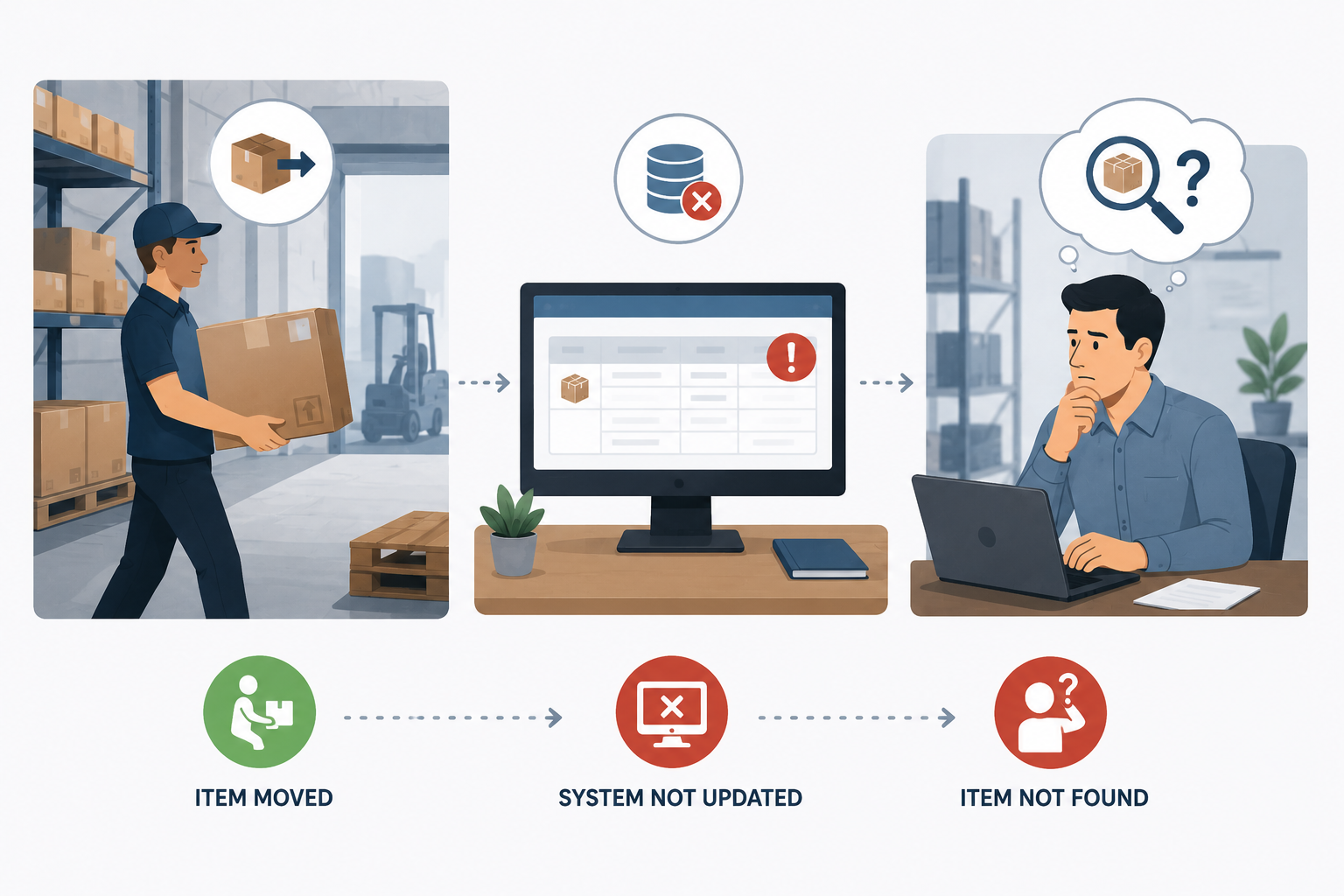
What started as one small unrecorded action created multiple operational problems.
This is how operational chaos usually begins — not through one major failure, but through small habits repeated consistently over time.
Why Growing Businesses Feel the Impact More

As businesses grow, inventory operations naturally become more complex.
There are:
- more employees
- more locations
- more products
- more equipment movement
- more daily transactions
Small bad habits that once seemed harmless can quickly become serious operational risks.
A growing business cannot rely on inconsistent inventory processes for long.
Without organized systems and disciplined workflows, operational chaos becomes much harder to control.
How Modern Inventory Systems Reduce Chaos
Modern inventory systems help businesses create more organized and reliable operations.
Instead of depending entirely on manual processes, businesses can improve accuracy through automation and real-time visibility.

Helpful features include:
- real-time inventory tracking
- barcode and QR code scanning
- automated stock alerts
- centralized dashboards
- permission-based access
- audit history and activity logs
These tools help businesses:
- reduce manual errors
- improve consistency
- increase visibility
- simplify inventory control
More importantly, they help teams build better operational habits over time.
Conclusion
Operational chaos rarely starts with one major mistake.
Most of the time, it grows slowly through small habits repeated every day.
A missing update, poor labeling, delayed audits, or inconsistent tracking may seem harmless at first. But as businesses grow, these small issues can turn into larger operational problems that affect productivity, accuracy, and decision-making.
The businesses that scale successfully are usually the ones that build organized inventory habits early.
Good inventory management is not just about tracking items.
It is about creating systems and processes that keep operations reliable, efficient, and under control.
👉 Take a free demo today or sign up now and see how smarter inventory management can help reduce operational chaos.