


Imagine an employee is ready to start a job.
They have everything they need except one thing: a tool, laptop, cable, piece of equipment, or box of supplies.
They know the company has it. They just don’t know where it is.
So the search begins.
First, they check where the item is normally kept. It’s not there. They check another shelf, then another room. Finally, they ask a coworker:
“Have you seen it?”
Maybe someone remembers using it yesterday. Someone else thinks it was moved to another department. Another employee suggests checking a different storage area.
Before long, a simple task has turned into a search.
The item may eventually be found, but valuable working time has already been lost.
And when this happens regularly across a business, those small searches can become a much bigger operational problem.
A Few Minutes Can Add Up
Searching for something at work doesn’t always seem serious.
If an employee spends five minutes looking for a cable or ten minutes trying to locate a tool, it’s easy to think, “It’s only a few minutes.”
But what happens when the same thing happens tomorrow?
What if several employees are doing it throughout the week?
Those small interruptions can slowly become part of the normal workday.
And the problem isn’t always that something has disappeared.
Sometimes, th
The Search Doesn’t Stop With One Employee

One of the biggest problems with searching for equipment is that it can quickly involve other people.
An employee asks a coworker.
The coworker asks a supervisor.
The supervisor contacts another department.
Someone may even need to call another location.
Suddenly, one missing item has interrupted several people’s work.
Imagine a technician needs a particular piece of equipment to finish a job. They check the usual storage area, but it isn’t there.
They ask another technician, who remembers seeing it earlier in the week.
Now someone has to figure out who used it last. Was it taken to another room? Was it moved to another location? Did someone borrow it without recording the move?
The equipment may not actually be lost.
The real problem is that nobody knows where it is.
Searching Interrupts More Than One Task
The cost of searching isn’t only the time spent looking.
It’s also the work that isn’t happening during the search.
The employee looking for equipment isn’t completing their original task. A coworker helping with the search is pulled away from their own work. A manager answering questions is interrupted as well.
And if that equipment is needed to complete a project, the project itself may have to wait.
One search may not seem significant.
But when these searches happen repeatedly across different employees, departments, and locations, they can create unnecessary interruptions throughout the workday.
When Employees Have to Depend on Memory
Many workplaces still rely heavily on people remembering where things are.
“It’s probably in the back room.”
“I think someone else has it.”
“Someone moved it last week.”
“Try checking the other building.”
This may work when a business is small and only a few people use the same equipment.
But businesses change.
Teams grow. Equipment gets shared. Items move between rooms, departments, employees, and locations. New employees join while others leave.
And people don’t always remember to tell everyone when something has moved.
Eventually, finding equipment becomes a guessing game.
Employees shouldn’t have to find the person who might know where something is every time they need an item.
When “We Can’t Find It” Becomes “Let’s Buy Another One”
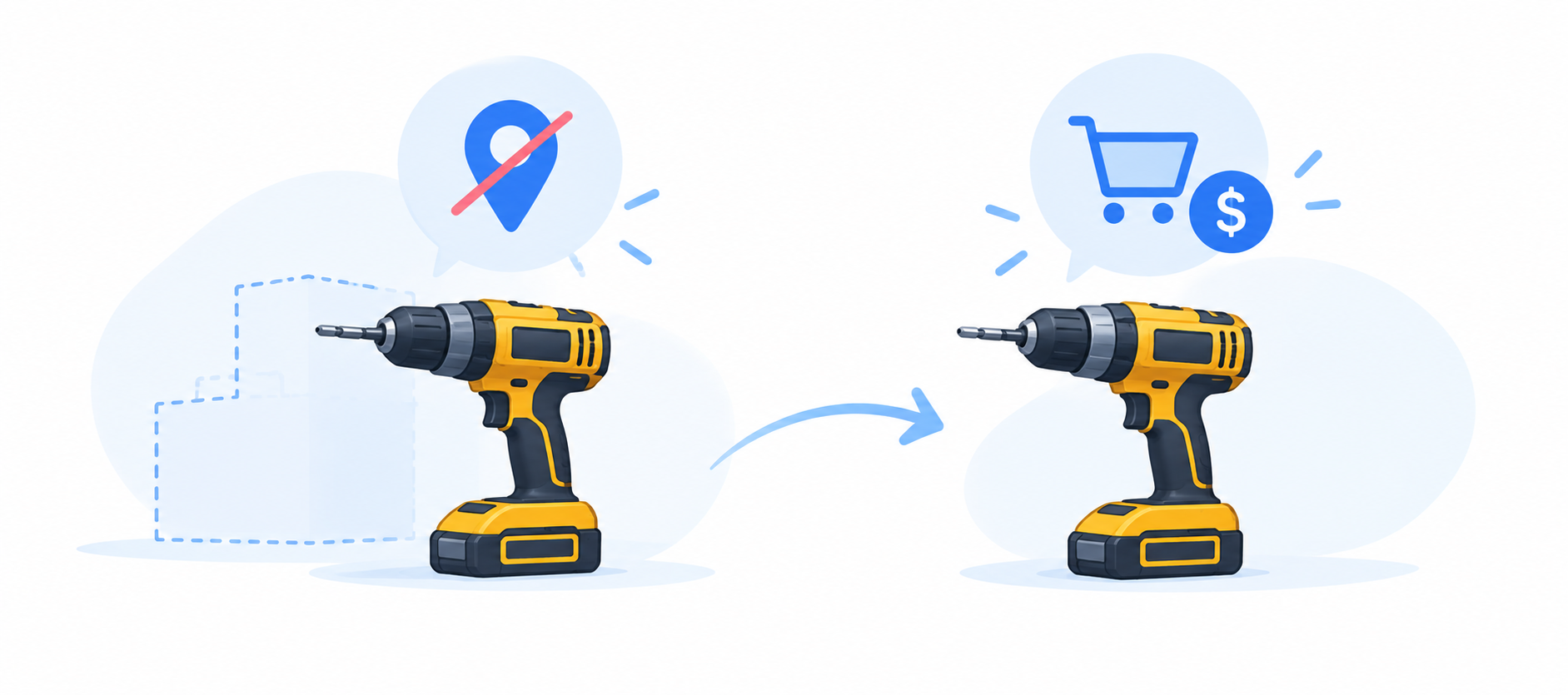
Searching can create another unnecessary cost.
If a business cannot locate an item, someone may eventually assume it is missing and purchase a replacement.
Imagine a company owns several of the same tools. One can’t be found, so a new one is ordered.
A few weeks later, the original tool turns up in another storage room.
The business has now spent money replacing something it already owned.
The same situation can happen with laptops, equipment, tools, supplies, replacement parts, and other business assets.
Sometimes, the business doesn’t need more equipment.
It needs better visibility into what it already has.
How Quickly Can Your Team Answer “Where Is It?”
Here’s a simple way to look at your current process.
Imagine someone asks:
“Where is the laptop we use for this project?”
How quickly could your team answer?
What about:
“Who has the equipment that was used yesterday?”
Or:
“Do we have another one of these at our other location?”
If finding the answer requires phone calls, messages, spreadsheets, or walking around the building, the process may be making a simple task harder than it needs to be.
Knowing that your business owns something is only part of the picture.
Employees also need to be able to find it when they need it.
From Searching to Finding
Better tracking can make these everyday situations much easier.
Instead of relying on memory or asking several people, employees can use a centralized system to find information about inventory and assets.
Barcode and QR code scanning can also help teams identify items and connect physical equipment with its digital record.
The goal isn’t to give employees more administrative work.
It’s the opposite.
Good tracking should make information easier to access so employees can spend less time searching and more time doing their actual work.
A good system should help answer a simple question:
“Where is the thing I need?”
without turning it into a 20-minute investigation.
How Tracmor Can Help
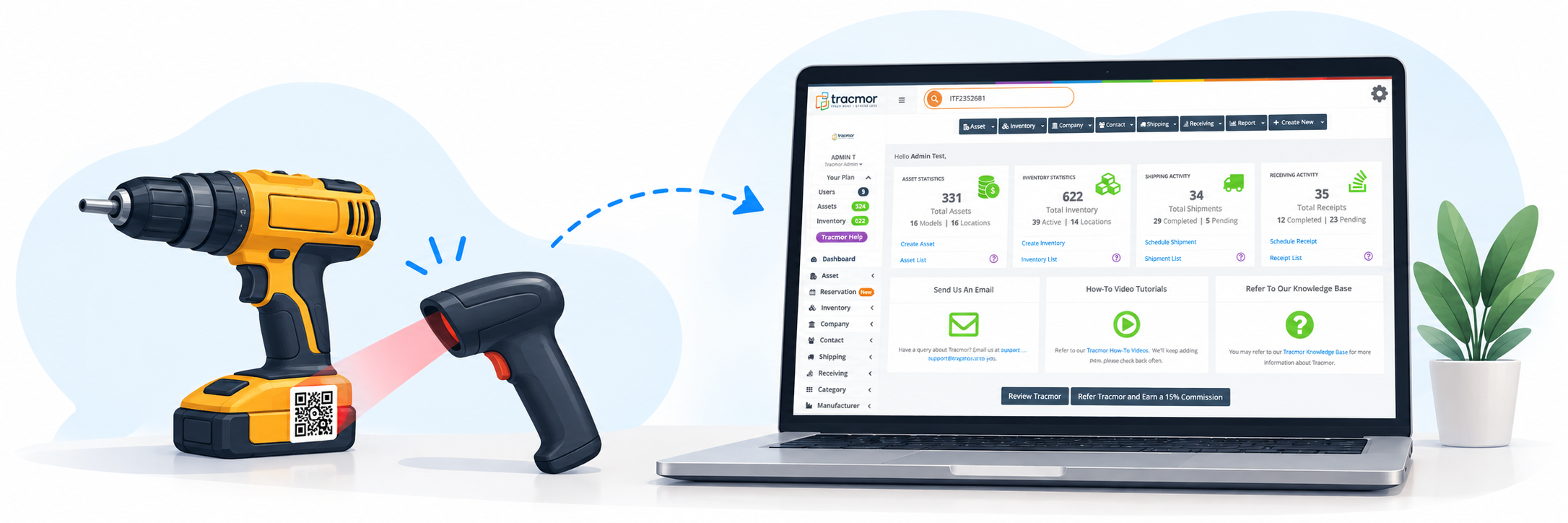
Tracmor provides businesses with a centralized place to manage inventory and asset information.
Instead of relying entirely on memory, paper records, separate spreadsheets, or asking coworkers, teams can keep important tracking information connected in one system.
Barcode and QR code tracking can help identify items and connect them with the appropriate records. This is especially useful for businesses where inventory, equipment, and assets regularly move between employees, departments, storage areas, or locations.
The idea is simple:
Less searching. Fewer interruptions. More time spent getting work done.
Your Employees Shouldn’t Have to Hunt for What They Need
Searching for something at work can feel like a small inconvenience.
But when the same problem happens repeatedly, across multiple employees and workdays, those few lost minutes begin to matter.
Better inventory and asset tracking isn’t only about knowing what your business owns.
It’s also about making sure employees can find what they need when they need it.
Because the next time someone asks, “Where is it?”, finding the answer shouldn’t require a search party.
Make your inventory and assets easier to find, track, and manage with Tracmor. Take a free demo today.